 Reggel Zoli elszaladt reggeli után meghosszabbítani a motor-bérlésünket még egy nappal. Közben én a tegnap felfedezett szomszédos kávézóban kikértem a kávénkat, a hotelben már nem iszunk. Amúgy ma végre láttuk az étterem felső részét, mert mivel most több vendég van, ma már svédasztalos volt a reggeli.
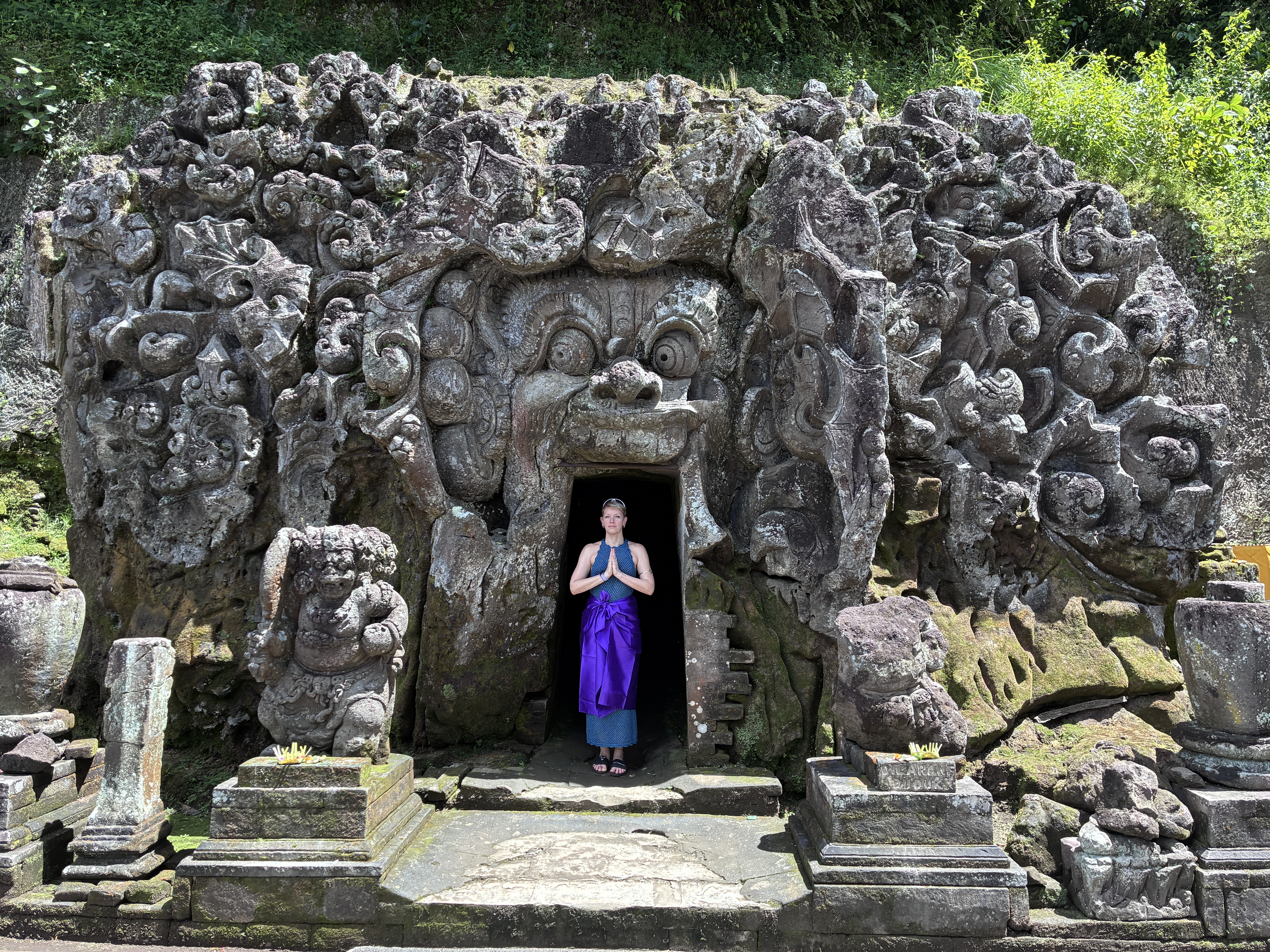
Mai első megállónk a Goa Gajah hindu templom volt. Ezt hívják Elefánt-barlangnak is, mert elvileg egy elefántot ábrázol a barlang bejárata, hát nem is tudom. A barlang egyébként meditációs célt szolgál. Van kültéri tisztító szertartásra medence is. Megtaláltam a kedvenc fámat, pontosabban többet is, az elsőt a medence mellett, egy óriásit. Van itt egy buddhista templom is, a dzsungelben, olyan volt, mintha az leomlott volna, mert faragott kőtömbök hevertek több helyen. A neten nem találtam róla leírást. Itt is kaptunk szárongot és persze itt is akarták eladni nekünk már a parkolóban, de bérlést is ajánlgattak. Mindenhol adnak ingyen amúgy, vagyis a fejenként 50eIDR belépődíj, kb. 1000Ft, az tartalmazza.
A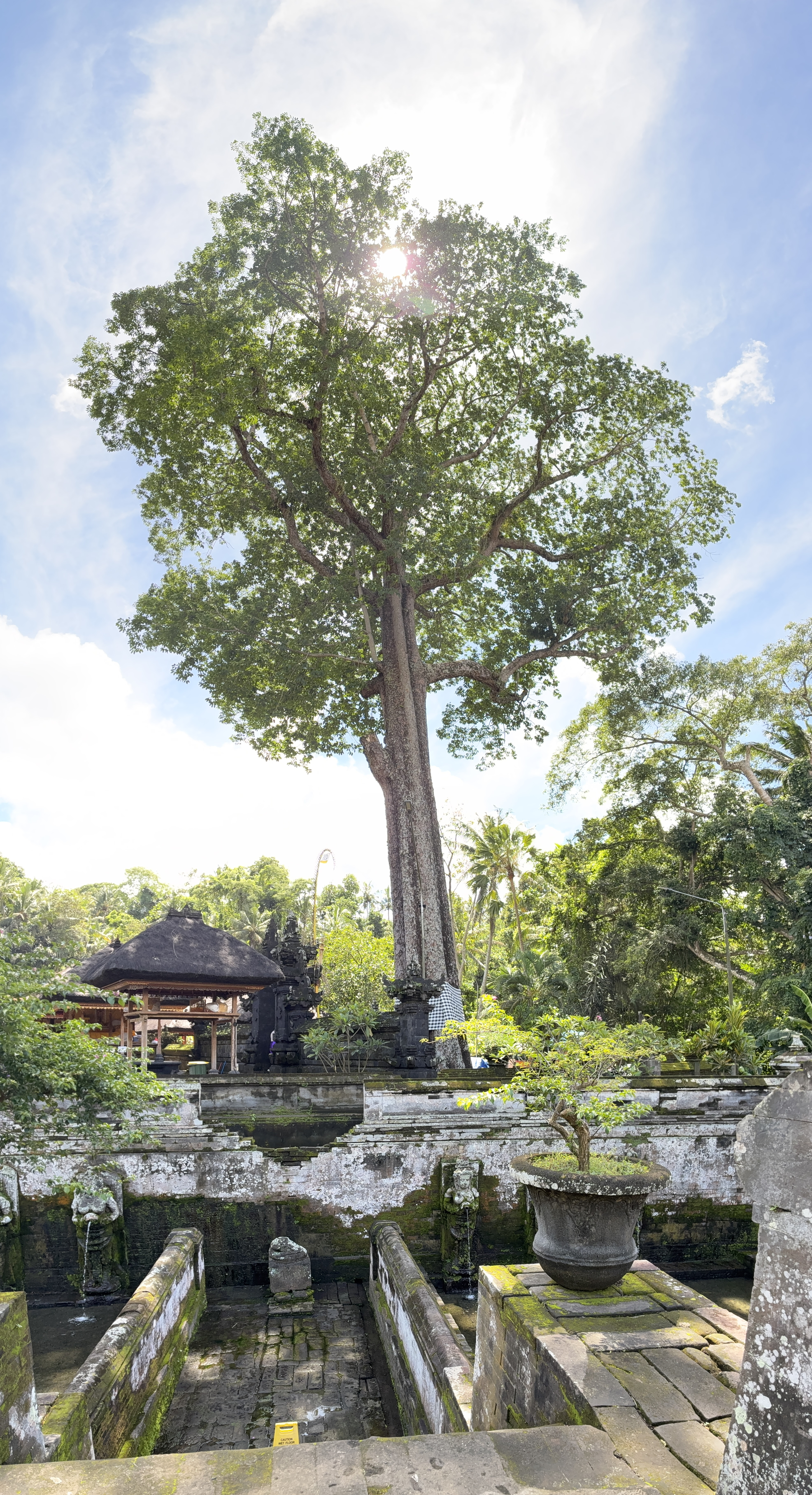 hogy lementünk a sok-sok lépcsőn, aztán még egy másik oldalon fel, találtunk egy olyan bejáratot a templomhoz, ahol simán be lehetett volna akár lógni is. Mondjuk lila szárongod nem lenne, de láttunk pl. hosszú nadrágos néniket, akik bejöhettek anélkül.
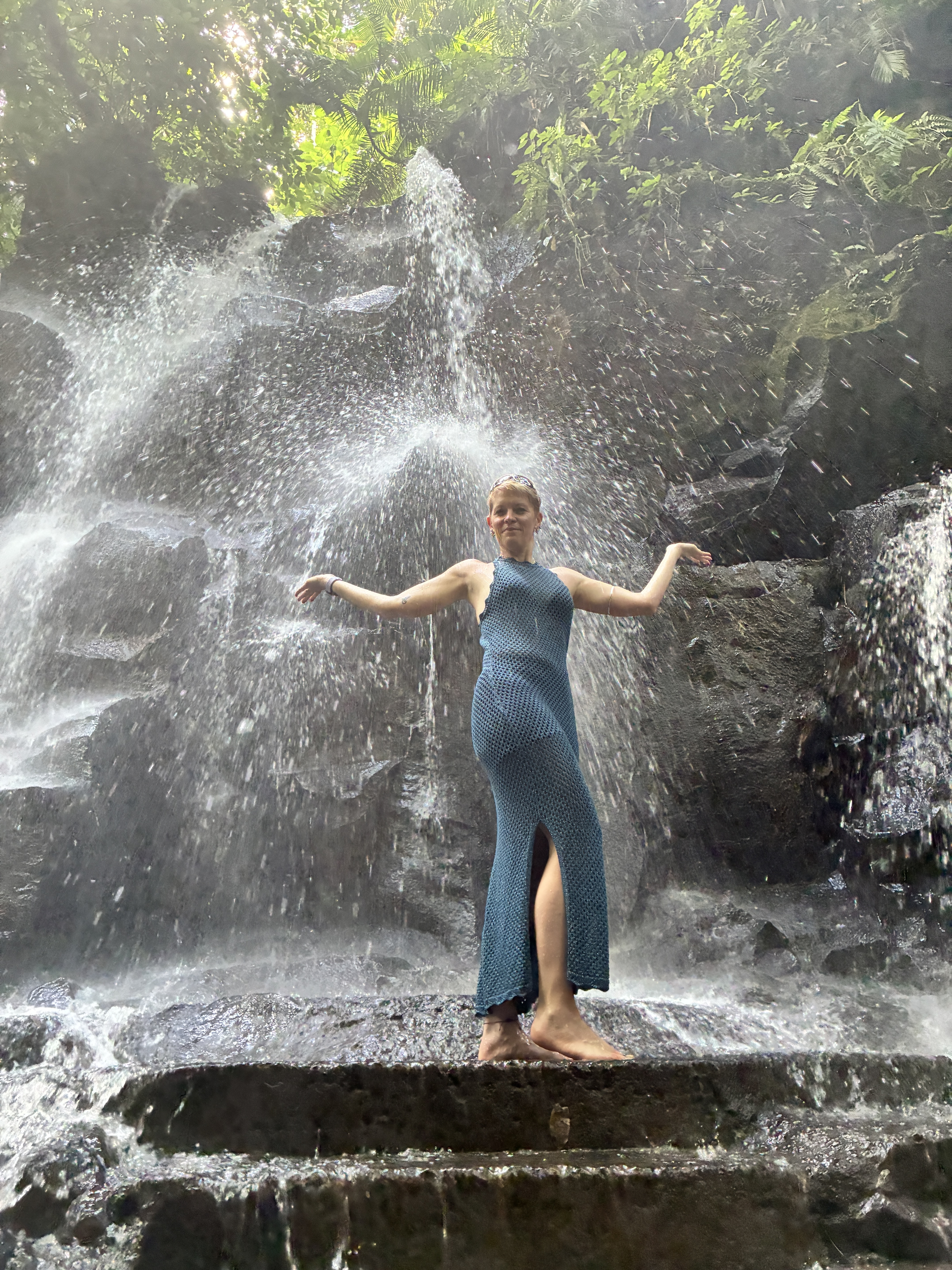
Nagyon vártuk, hogy odaérjünk a Taman Sari vízeséshez, ugyanis a sok lépcsőzés megtette a hatását és jól felmelegedtünk. Ide a belépő 30eIDR, 600Ft fejenként. Ahogy lépcsőztünk lefelé volt két fotózós hely, ahonnan ráláttunk a vízesésre, egy fészek-szerű, még egy kör alakú beülős, ami itt a szigeten mindenhol is van, sok helyen szív formában. Nagyon jól kitalálták ezt az üzleti modellt amúgy, mindenhol van wc, öltöző, elég kulturált, vannak, akik figyelik mit csinálsz a vízesésnél, itt pl. hálóval a vizet is tisztították, ahogy a medencéket szokták. Mikor másztunk vissza a lépcsőkön, volt egy büfé, megálltunk venni egy üdítőt. Nagyon kedves volt a nő, a kutyája meg belémszeretett és alig akart kiszállni az ölemből. Eléggé tört angollal beszélt, a felét sajnos nem értettük. Annyit igen, hogy 20 éve csak az itteni szent vizet issza, és hogy teljesen egészséges.
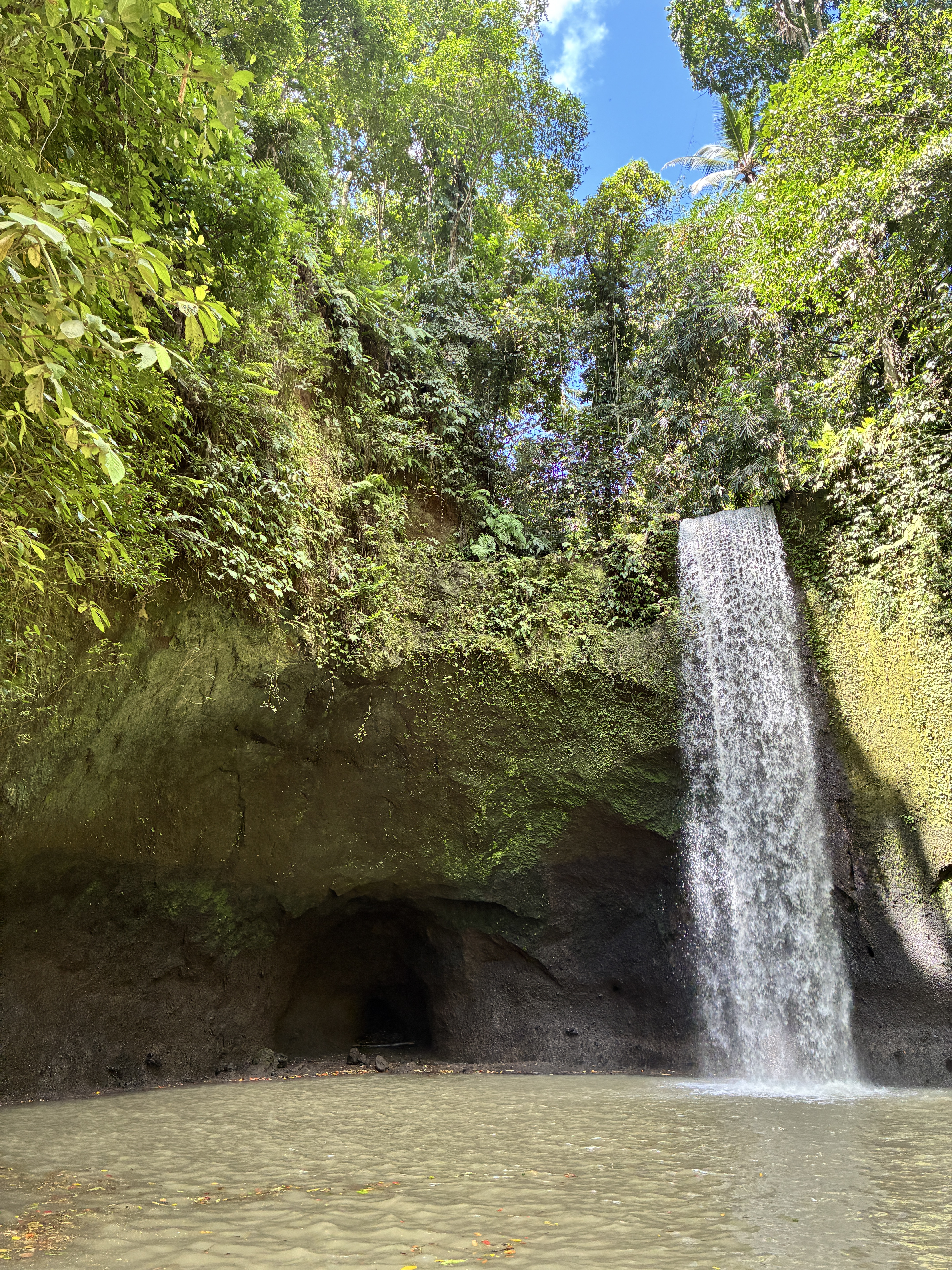
 A kettes számú, a Tibumana vízesés volt. A legtávolabbival kezdtük és haladtunk vissza Ubud felé. Ehhez a vízeséshez egy pálmafasor között vitt az út, csodás volt. Szent vizet tartalmazó külön medence, kis vízesés, bambuszhíd, betonból (?) mindenféle állatszobor és végül maga a nagy vízesés. Itt vettünk maniókachipset, mert megszerettük. Az árus miután megkérdezte honnan jöttünk, magyarul megköszönte a vásárlást. Volt még egy harmadik, kis vízesés is. Újabb lépcsők, mert templom is volt, ahol pedig kb. a Fátyol-vízesésre hajazó, mint realizáltuk, némileg mesterségesen kialakított részre is rábukkantunk. A folyóban távolabb helyi gyerekek fürödtek, ugráltak. Ide 25eIDR, 500Ft/ fő volt a belépő.
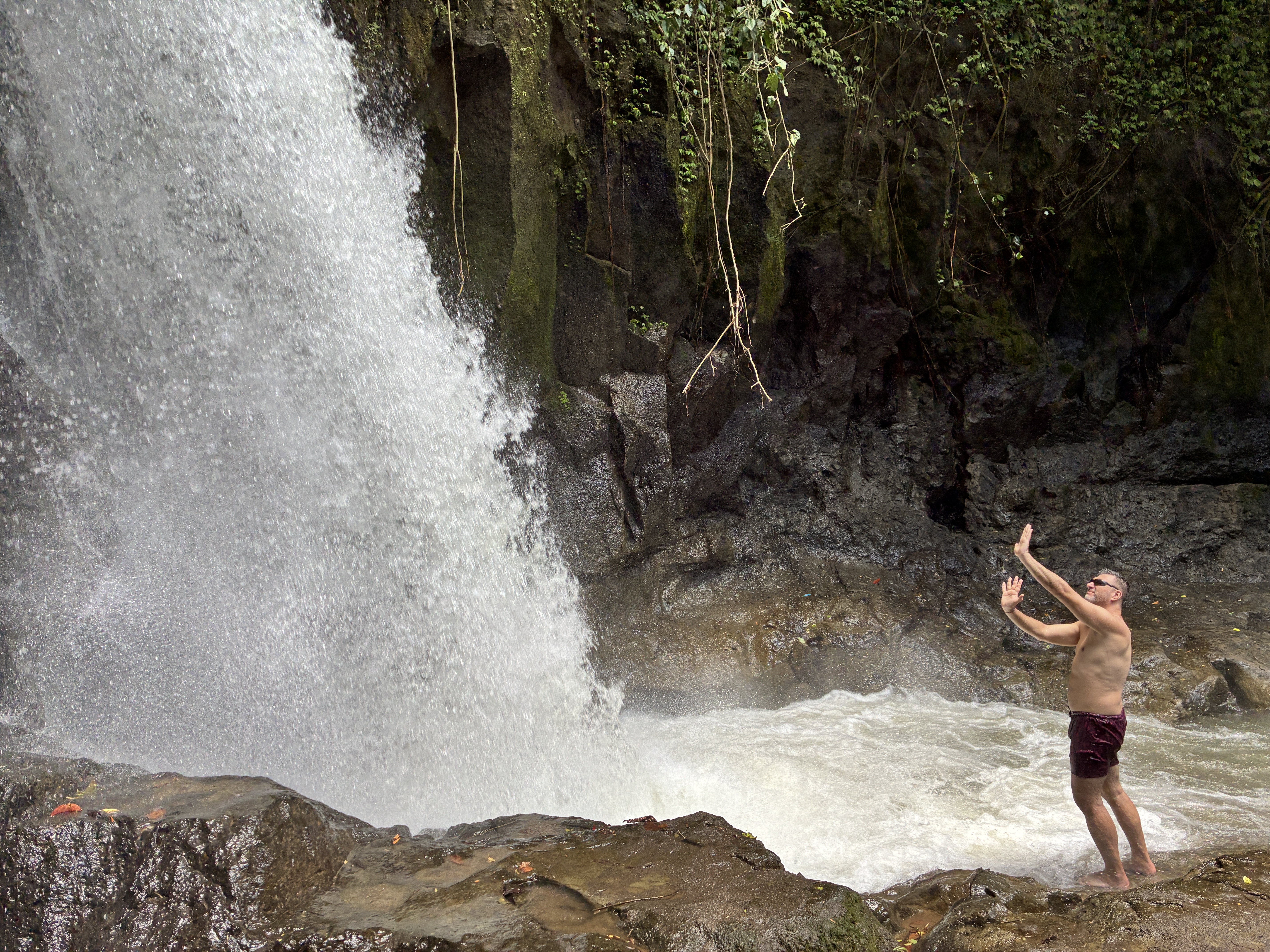
Harmadikként a Goa Rang Reng vízesés következett. Ide ismét lépcsősor vitt le, aminek két oldala vagy növényekből, vagy faragott, zöld mohás kövekből állt. Volt egy hangulata. A víz egy barlangot át érkezett a lépcsőzetes kövekre, ahová fel lehetett mászni, egy helyi felügyelő elmondta Zolinak, hogy mire figyeljen a mászásnál, én azt kihagytam. Útközben újabb díszes pók egyedeket láttam, de sajnos lefotózni nem sikerül őket, mert bereng a háló és homályos lesz – vagy csak én vagyok tudatlan, hogy lehetne ezt jól telefonnal megtenni.
 Kanto Lampo volt az utolsó programpont, hát ez volt a legturistásabb. Volt, ahol kb. félórás sorban álltak a megfelelő insta-fotóért az emberek, na, mi oda nem álltunk be, máshol nyilván csináltunk. Két rész volt, 25e IDR belépőért, az egyik kissé népfürdő jellegű, a másik meg maga a vízesés. Vagy lépcsőkön közelítetted meg azokat külön-külön, vagy Zoli, például átsétált a folyóban az egyik helyről a másikra. A legviccesebb feliratot itt láttuk: Naked photos are prohibited! Sexy yes but no naked. – Meztelen fotót készíteni tilos, szexit lehet, de meztelent nem
  Az embertömeg miatt itt töltöttük a legkevesebb időt, és itt nem is köszönték meg, hogy jöttünk, mint az összes többi helyen.
Hazafelé megálltunk egy 4,9-es értékelésű kávézóban, amit alig találtunk meg, mert az elejét felújították épp, és amúgy is egy hotelben van. A parkolás nem volt egyszerű, és mire kijöttünk, átpakolták a motort, ami itt úgy látszik szokás, mert a hotelnél is máshol találtuk azt meg egyik reggel, mint ahol hagytuk. A bukók, simán a motoron maradnak éjjelre is, senki nem viszi azokat el.
 A hotelbe visszaérve lementünk még a medencéhez, úszkáltunk kicsit, majd némi pihenés után, itt az utcában lévő, Sun de Bisma nevű helyen megvacsiztunk, indonéz vacsit, 230eIDR-ért, ami kb. 4600Ft.
In English:
In the morning, Zoli ran off after breakfast to extend our motorbike rental for another day. Meanwhile, I ordered our coffee at the neighboring café I discovered yesterday, since we no longer drink it at the hotel. By the way, today we finally saw the upper part of the restaurant because, since there are more guests now, breakfast was served buffet-style today.
Our first stop today was the Goa Gajah Hindu temple. It’s also called the Elephant Cave because the entrance to the cave supposedly depicts an elephant, though I’m not so sure. The cave is actually used for meditation purposes. There is also an outdoor pool for purification ceremonies. I found my favorite tree as well, actually several, the first one next to the pool, a huge one. There is also a Buddhist temple here, in the jungle, which looked as if it had collapsed because carved stone blocks were lying around in several places. I couldn’t find any description of it online. Here, too, we were given sarongs, and of course, they tried to sell them to us already in the parking lot, but they 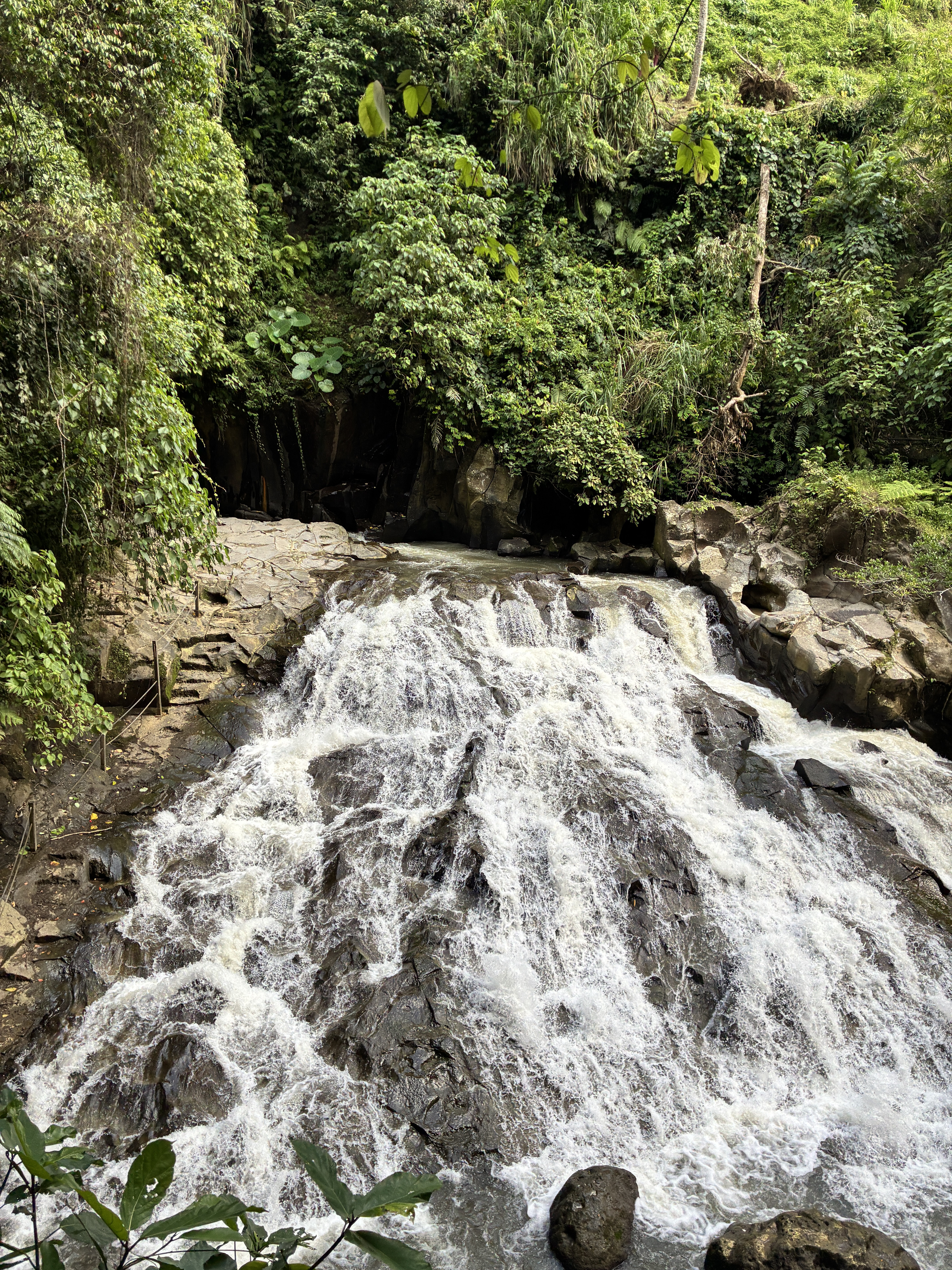 also offered rentals. Everywhere they give them for free anyway, or rather the 50,000 IDR per person, about 1,000 HUF, covers that.
As we went down many steps and then up on another side, we found an entrance to the temple where you could have easily snuck in. Well, you wouldn’t have a purple sarong, but we saw, for example, ladies in long pants who were allowed to enter wearing those.
We were really looking forward to reaching the Taman Sari waterfall because all the stair climbing had taken its toll and we were nicely warmed up. The entrance fee here is 30,000 IDR, about 600 HUF per person. As we descended the stairs, there were two photo spots from where we could see the waterfall: a nest-like one and a circular seating area, which is found all over the island, often in heart shapes as well. They really came up with a clever business model here; there are toilets and changing rooms at every spot, quite decent, and some people watch what you do at the waterfall. For example, here they cleaned the water with a net, as is usually done with the pools. When we climbed back up the stairs, there was a snack bar where we stopped to buy a soft drink. The woman was very kind, and her dog fell in love with me and hardly wanted to leave my lap. She spoke quite broken English, and unfortunately, we didn’t understand half of it. We did catch that she has been drinking only the sacred water here for 20 years and that she is completely healthy.
The second one was the Tibumana waterfall. We started with the farthest one and made our way back towards Ubud. The path to this waterfall went through a row of palm trees, which was quite atmospheric. There was a separate pool containing sacred water, a small waterfall, a bamboo bridge, various animal statues made of concrete (?), and finally the large waterfall itself. Here we bought cassava chips because we liked them. After asking where we were from, the vendor thanked us for the purchase in Hungarian. There was also a third small waterfall. More stairs, because there was also a temple, where we found a part somewhat resembling a Hungarian famous waterfall, which we realized was somewhat artificially created. Further down the river, local children were swimming and jumping. The entrance fee here was 25,000 IDR, 500 HUF per person.
Third on the list was the Goa Rang Reng waterfall. Again, a staircase led down here, with either plants or carved, green moss-covered stones on both sides. It had a certain atmosphere. The water came through a cave onto the stepped rocks, which you could climb on. A local supervisor told Zoli what to watch out for while climbing, but I skipped that part. Along the way, I saw more ornate spiders, but unfortunately, I couldn’t photograph them because the web interfered and the pictures came out blurry—or maybe I just don’t know how to do it properly with a phone.
Kanto Lampo was the last program point, and it was definitely the most touristy. In some places, people stood in line for about half an hour for the perfect Instagram photo, but we didn’t join those lines; of course, we took photos elsewhere. There were two parts, with a 25,000 IDR entrance fee: one was somewhat like a public bath, and the other was the waterfall itself. You could approach them separately via stairs, or, for example, Zoli walked across the river from one spot to the other. The funniest sign we saw here said: “Naked photos are prohibited! Sexy yes but no naked.” Due to the crowds, we spent the least time here, and unlike all the other places, they didn’t even thank us for coming.
On the way home, we stopped at a café with a 4.9 rating, which we barely found because the front was being renovated and it is located inside a hotel anyway. Parking was not easy, and by the time we came out, they had moved the motorcycle, which seems to be customary here, because at the hotel we found it in a different spot in the morning than where we left it. The crash helmets simply stay on the motorcycle overnight; no one takes them away.
After returning to the hotel, we went down to the pool, swam a bit, and after some rest, we had dinner at a place called Sun de Bisma on this street, where we are Balinese dishes for 230K IDR.